Call us now :08071931141
 Send Inquiry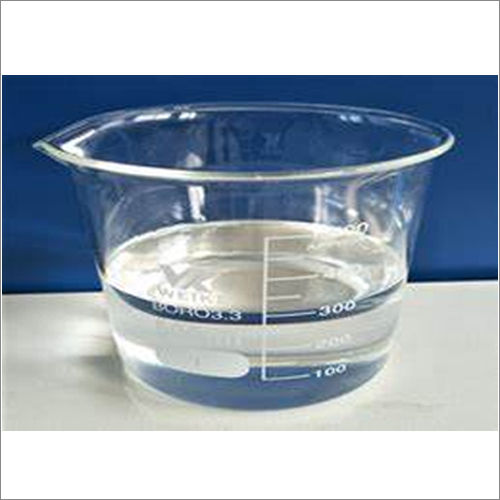
Di Allyl Phthalate Chemical
Product Details:
- Structural Formula C6H4(CO2CH2CH=CH2)2
- Density 1.17 Gram per cubic centimeter(g/cm3)
- Taste Odorless
- Solubility Insoluble in water, soluble in most organic solvents
- Molecular Formula C14H14O4
- Form Clear liquid
- Other Names DAP
- Click to View more
X
Di Allyl Phthalate Chemical Price And Quantity
- 1 Kilograms
- Avoid release to environment, hazardous to aquatic life
- 200 kg drum
- < 0.1 mm Hg at 20C
- 435C
- Colorless to pale yellow transparent liquid
- 12 months from date of manufacture
- Stable under recommended storage conditions
- Not classified as dangerous goods
- 14-17 mPas at 20C
- 161C (Open cup)
Di Allyl Phthalate Chemical Product Specifications
- DAP
- Meet industry specification
- Clear liquid
- 1.17 Gram per cubic centimeter(g/cm3)
- Odorless
- Insoluble in water, soluble in most organic solvents
- C14H14O4
- C6H4(CO2CH2CH=CH2)2
- Phthalate chemical, plasticizer
- Industrial Chemical
- 131-17-9
- 99.0%
- Phthalic anhydride and allyl alcohol
- 29173990
- Faint ester-like odor
- Yes
- 203-550-1
- Industrial Grade
- 246.26 g/mol
- Liquid
- 340C
- Room Temperature
- n20/D 1.534 - 1.538
- Industrial
- Widely used in plastics industry, casting resins, adhesives, electrical encapsulation
- Di Allyl Phthalate
- Yes
- < -70C
- Avoid release to environment, hazardous to aquatic life
- 200 kg drum
- < 0.1 mm Hg at 20C
- 435C
- Colorless to pale yellow transparent liquid
- 12 months from date of manufacture
- Stable under recommended storage conditions
- Not classified as dangerous goods
- 14-17 mPas at 20C
- 161C (Open cup)
Di Allyl Phthalate Chemical Trade Information
- Cash in Advance (CID)
- 1000 Kilograms Per Month
- 7 Days
- All India
Product Description
Diallyl phthalate compounds are sold in accordance with military specifications and are utilised in crucial electrical and electronic applications that demand great reliability in challenging environmental conditions over an extended period of time. Electronic connectors used in communications, computer, and aircraft systems represent a substantial application area. Circuit boards, insulators, and potentiometers are among more uses.
Moreover, it is employed in the manufacturing of polyester resins, varnishes, and thermosetting plastics as a monomer. Moreover, it serves as a cross-linking agent in the manufacture of solid, pourable polyester resins.
It serves as a crucial monomer in the creation of thermosetting moulding compounds, which need to have excellent electrical and dimensional stability as well as heat and solvent resistance.
Versatile Industrial Applications
Di Allyl Phthalate is especially valued in the plastics industry, as well as for casting resins, adhesives, and electrical encapsulation. Its unique chemical structure enhances flexibility and performance in manufactured products, making it integral to the development of high-quality industrial goods. Its excellent solubility in organic solvents broadens its industrial utility.
Safety and Environmental Considerations
While not classified as dangerous goods, Di Allyl Phthalate should be handled with care due to its toxicity if inhaled or ingested and its hazardous effect on aquatic ecosystems. It is critical to prevent environmental release and use recommended personal protective equipment during handling.
Packaging, Storage, and Stability
DAP is supplied in robust 200 kg drums to ensure safe transport and storage. It exhibits remarkable stability for up to 12 months when stored at room temperature and protected from direct environmental exposure. Adhering to these guidelines preserves its quality and effectiveness for industrial use.
FAQ's of Di Allyl Phthalate Chemical:
Q: How should Di Allyl Phthalate be safely stored and handled in an industrial setting?
A: Di Allyl Phthalate should be stored in tightly sealed 200 kg drums at room temperature, away from direct sunlight and sources of ignition. Proper ventilation and personal protective equipment, such as gloves and safety goggles, are recommended when handling the product to avoid inhalation or ingestion.Q: What are the primary applications of Di Allyl Phthalate in industry?
A: Di Allyl Phthalate is widely used as a plasticizer, in the manufacture of casting resins, adhesives, and for encapsulating electrical components. Its ability to enhance flexibility and durability makes it a valuable additive in the plastics and electronics industries.Q: When does Di Allyl Phthalate expire, and how can shelf life be maximized?
A: This chemical has a shelf life of 12 months from the date of manufacture. To ensure optimal stability and performance, store it in its original packaging at room temperature and avoid exposure to moisture or direct light.Q: Where can Di Allyl Phthalate be sourced from in India?
A: Di Allyl Phthalate can be obtained from authorized industrial chemical manufacturers and suppliers across India, typically available in standard 200 kg drum packaging.Q: What is the environmental impact of releasing Di Allyl Phthalate, and how should disposal be managed?
A: Di Allyl Phthalate is hazardous to aquatic environments. Avoid releasing it into drains or natural water sources. Any waste should be collected and disposed of per local hazardous chemical regulations to minimize environmental impact.Q: Can Di Allyl Phthalate be mixed with water or other solvents for applications?
A: Di Allyl Phthalate is insoluble in water but dissolves easily in most organic solvents, which makes it suitable for various industrial processes that require blending with compatible chemicals.Q: What benefits does Di Allyl Phthalate offer over other plasticizers or encapsulating agents?
A: DAP offers high purity, excellent stability, and performance in industrial applications, including a high flash point and reliable compatibility with organic solvents. These features help enhance the end product's durability, flexibility, and operational safety.Tell us about your requirement

Price:
Quantity
Select Unit
- 50
- 100
- 200
- 250
- 500
- 1000+
Additional detail
Mobile number
Email

Other Products in 'Industrial Chemicals' category



 Send Inquiry
Our Products

Plot No. 3, Indira Niwas, Peru Baug, Aarey Road, Goregoan (East), Mumbai - 400063, Maharashtra, India

Mr Shashikant Mehta
(Proprietor)
Mobile :08071931141
 Send Inquiry
 Send SMS
Developed and Managed by Infocom Network Private Limited.
